Hitler's Dictatorship
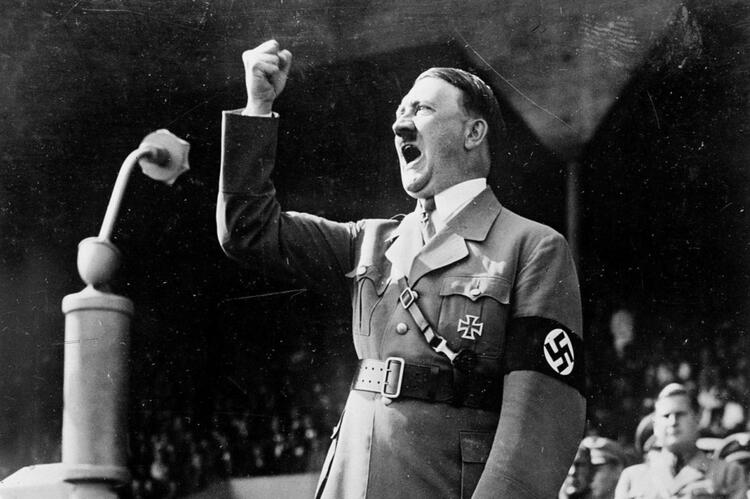
Hitler addresses his followers, May 1937.
As soon as he began to assert his control, German citizens' civil rights were restricted. The police could randomly search homes and make arrests, and freedom of speech was no longer a given. Arrests and intimidation occurred more frequently, and the government outlawed the Communist Party. The first concentration camps were established to imprison all of these political prisoners. The "Enabling Act" gave Hitler the freedom to pass new rules without intervention from the president of the Reichstag. With the Gleichschaltung, many Jewish and politically questionable civil officials were let go. All currently active political parties were outlawed, and Germany became a one-party state in the middle of July 1933. There were also "cleansings" of the cultural and scientific realms. Everything that was "un-German" had to go, according to the Nazis. Books by Jewish, left-leaning or pacifist authors were set on fire.The German Jews were frequently subjected to abuse, repression, and violence. The government started taking official action against Jews on April 1st, 1933. A significant boycott of Jewish products was declared. The Holocaust resulted from a sequence of anti-Jewish actions that started with this. Germany became a dictatorship once Hitler and the Nazis gained control. They repeatedly employed legal strategies to give their acts the appearance of legitimacy. Hitler gradually undermined democracy and turned it into an autocracy.
ANALYSIS
Hitler's dictatorship would be the peak of his career. This is what he is known for even after his death. We will then be analyzing his character during the pinnacle of his life.


ECONOMIC AND POLITICAL SELF
EconomicThe Economy of Germany can be traced back to 1933 when Adolf Hitler became the Chancellor of Germany, He introduced policies which targeted the German Economy. These Policies Include privatization of state industries, tariffs on imports, and an attempt to achieve national economic self-sufficiency or autarky. Before The War (1933-1939), The Unemployment rate was high which is 30%. Hitler Appointed Hjalmar Schacht as the President of the Reichsbank - The Central Bank of the German Reich in 1933 and Minister of Economics in 1934. The Nazis believed in war as the primary engine of human progress, and argued that the purpose of a country's economy should be to enable that country to fight and win wars of expansion. During the 1930s, Nazi Germany increased its military spending faster than any other state in peacetime. In the 1930s, world prices for raw materials (which constituted the bulk of German imports) were on the rise. At the same time, world prices for manufactured goods (Germany's chief exports) were falling. The result was that Germany found it increasingly difficult to maintain a balance of payments. During the War (1939-1945), During the war, as Germany acquired control of new territories (by direct annexation, by military administration, or by installing puppet governments in defeated countries), these new territories were forced by the Nazi administration to sell raw materials and agricultural products to German buyers at extremely low prices. Forced Labor has happened during this time as well. Historians estimated that 5 million Polish Citizen went through them. Slave Labor among Homeless, criminals as well as political dissidents, communists, Jews, and anyone else that the regime wanted out of the way were imprisoned in labor camps. in 1942, The Nazis Dedicate country's economic resources to war hence Military Spending grows rapidly. In Late 1944, After the Allies Bombed the German Factories and Cities. This Resulted to Germany's war economy collapsing. Shortage of Food, fuel production dropped by 86% in eight months, explosive output was reduced by 42% and the loss of tank output was 35%. In the summer of 1944 between 200,000 and 300,000 men were permanently employed in repairing oil installations and placing oil production underground.Political
Hitler started his political career by using his oratory skills to attract people to become members of the German National Socialist Worker’s Party (NSDAP), a group known for its extreme nationalism and antisemitism. He led a failed coup attempt which imprisoned him and caused the court to ban the NSDAP. During his time in prison, he had written Mein Kampf. From then on, They stuck to the law and gained power through elections. They used the people’s unrest during the global economic crisis to condemn the government and the peace treaty of Versailles. Their strategy turned out to be quite effective because, during the 1928 elections, they gained 0.8 million votes which increased to 6.4 million in 1930.The NSDAP party’s vitality and strength attracted the German people causing Hitler’s image to become more appealing to them. They attracted lots of people who had never before cast a ballot. Nevertheless, the party appeared to have peaked by November 1932. The NSDAP received 11% fewer votes than in the July elections earlier in the same year as the economy was improving.The conservative parties were unable to secure sufficient votes. They persuaded Paul von Hindenburg, the president, to choose Hitler as chancellor. With the NSDAP, they intended to build a majority cabinet. They made a catastrophic underestimate when they thought they could use Hitler to further their goals. On January 30, 1933, Von Hindenburg finally relented and named Hitler chancellor. As soon as he began to assert his control. The fire at the Reichstag, the German parliament building, was a significant turning point in this history. It served as the dictatorship's cornerstone. German citizens' civil rights were restricted. The police could randomly search homes and make arrests, and freedom of speech was no longer a given.On March 5, 1933, Nazi banners and posters flew high in the streets. Arrests and intimidation were occurring more frequently and the government outlawed the Communist Party. The first concentration camps were established to imprison all of these political prisoners. The conditions in the camps were appalling. People suffered abuse, were tortured, and even were killed. Jews and prominent Germans especially experienced hardships.The Reichstag assembled on March 23, 1933, in Berlin. The "Enabling Act," a new law, was the primary item on the agenda. It gave Hitler the freedom to pass new rules without intervention from the president or the Reichstag. Hitler offered the audience the option of "war or peace" in his speech and it was a subliminal threat to silence any critics. By no means was the process democratic. With the Gleichschaltung, many Jewish and politically questionable civil officials were let go. The Nazis were able to stop workers from organizing any resistance a result. All currently active political parties were outlawed and Germany became a one-party state in the middle of July 1933. There were also "cleansings" of the cultural and scientific realms. Everything that was "un-German" had to go, according to the Nazis. Books by Jewish, left-leaning or pacifist authors were set on fire.During their rule, the Nazis primarily targeted their political rivals with devastating power. The German Jews were frequently subjected to abuse, repression, and violence. The government started taking official action against Jews on April 1st, 1933. A significant boycott of Jewish products was declared. The Holocaust resulted from a sequence of anti-Jewish actions that started with this. Germany became a dictatorship once Hitler and the Nazis gained control. They repeatedly employed legal strategies to give their acts the appearance of legitimacy. Hitler gradually undermined democracy and turned it into an autocracy.
PERSONAL FLOURISHING
Positive Emotions- Hitler would seem to be confident in himself. He was said to be a powerful orator, in which confidence plays a big role. He also had high hopes in being able to change the world. But if you look at it closely, his ideologies and behavior were fueled by hate and negative emotions. His leadership was grounded on discrimination and violence. He had periods of depression and anxiety.Engagement - Hitler had a passion for arts, architecture, and Wagnerian opera. He also was a film addict, in the years before World War II, he watched two or three movies a night. The activity that he would most be absorbed in would be making speeches. As mentioned by his friend, August Kubizek, Hitler would often ramble for hours about his hopes and dreams. Sometimes Hitler even gave speeches complete with wild hand gestures to his audience of one.Relationships- It is already established that he did not have a good relationship with his father but it seems like that he had a lot of girlfriends (Sexuality of A.Hitler) but created an image of a celibate man with no domestic image, dedicated to NAzi Germany, His relationship with Eva Braun, which lasted nearly 14 years, was hidden from the public and all but his inner circle. Braun biographer Heike Görtemaker notes that the couple enjoyed a normal sex life. Hitler and Braun married in late April 1945, less than 40 hours before committing suicide together. It terms of friendhsip, Hitler didn’t have anyone to consider as a “close friend.” The closest to a ‘friend’ would be a few of his staff, but still, it wasn’t to a level that they fully know Hitler.Meaning - As mentioned he belived that his entire purpose in life was to uplift the german race.Achievement - At the start of WW2 it was favorable towards the Nazis and it empowered him to take drastic measures and gain and solidify the trust of the people towards him.